

Milk carton kayak

Hymnal with beaded cover
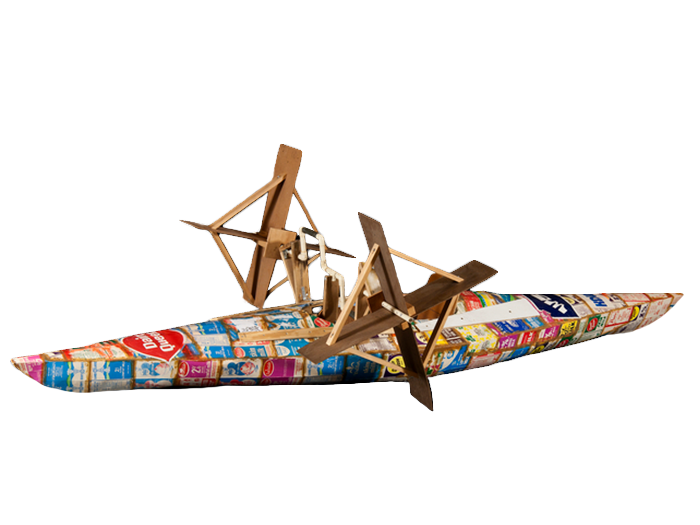
Milk carton kayak
Made by David Garron
1971
2004.142.1
Milk carton kayak
Built in 1971 and raced in the second Minneapolis Aquatennial Milk Carton Boat Race a year later, this kayak crossed Bde Maka Ska (then known as Lake Calhoun) several summers until 1977.
Thirty years later, maker David Garron cleaned up the kayak and dubbed it “The Spirit of ‘71.” He recruited 71-year-old Dudley Flamm to steer the boat and, you guessed it: “Spirit” won first place in the 2001 race.

Okodakiciye Wakan Tadowan Kin/Hymnal According to the Use of the Protestant Episcopal Church in the Missions Among the Dakotas of the Missionary District of South Dakota
Compiled by William Hobart Hare, 1902
Purchase supported by Carl A. Weyerhaeuser Rare Books Fund
PM1024 .O463 1902
Hymnal with beaded cover: Okodakiciye Wakan Tadowan Kin
The artist—or artists—who created this book cover didn’t sign it. Missionary churches organized Wíƞyaƞ Omníc̣iye (women’s gatherings) where members created needlework, quilts, quillwork, and beadwork to sell to raise funds for the church. This book cover might have been made in such a group.
Native women used these church-sponsored maker spaces to build and reinforce community ties, and to pass along art traditions. That’s what makes this work so intriguing. Elements of Ojibwe and Cree beadwork styles appear on this Dakota-language hymnal. Where did the artists come from? Did women from other tribes visit or live at this reservation? Who taught whom?
Funding provided by the State of Minnesota's Legacy Amendment, through the vote of Minnesotans on Nov. 4, 2008, and our generous donors and members.
Sponsors

The Ruth A. and Raymond A. Reister Endowed Fund

